The 'Hard Corner' Strategy: Why Signalized Intersections are the Ultimate Land Hedge
![[HERO] The 'Hard Corner' Strategy: Why Signalized Intersections are the Ultimate Land Hedge](https://cdn.marblism.com/zFBzugvumwV.webp)
If you've been in the land development game long enough, you know that the real money isn't always in the dirt itself: it's in knowing which pieces of that dirt are worth more to someone else than they are to you.
That's where the hard corner strategy comes in. And if you're not thinking about signalized intersections when you're walking a tract, you're leaving serious money on the table.
What is a Hard Corner, and Why Should You Care?
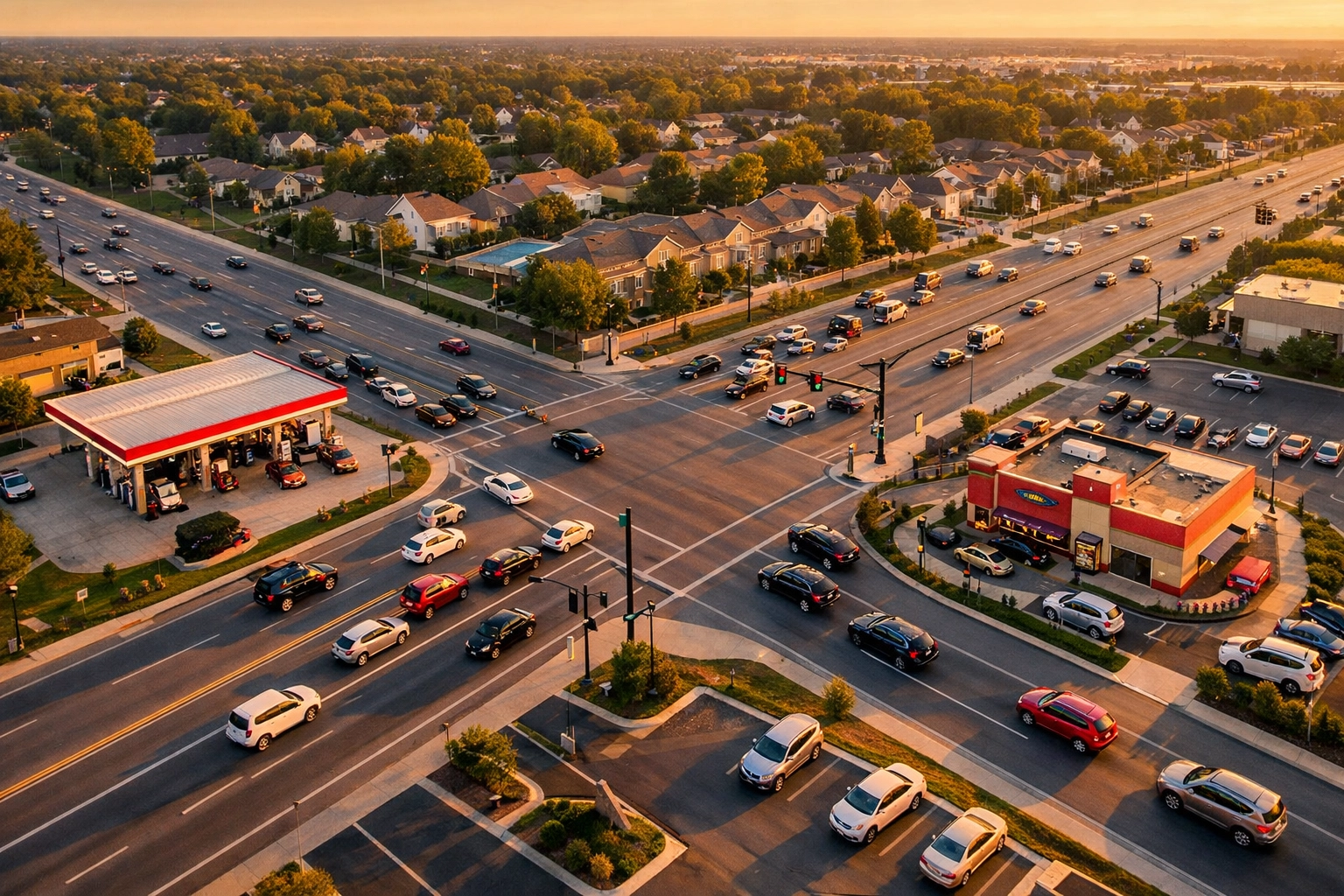
A hard corner is a parcel of land sitting at the intersection of two roads, giving you frontage on both sides. Think of the spot where a QuikTrip, a Chick-fil-A, or a Walgreens typically sits: highly visible, easy access from multiple directions, and catching traffic from both roads.
In land development, particularly when you're buying larger residential tracts (50+ acres), identifying these future hard corners early can fundamentally change your project economics. We're not just talking about a little extra profit: we're talking about selling off or ground-leasing these corners to retail users and using that capital to dramatically lower your cost basis on the remaining residential land.
The Financial Hedge: How Hard Corners De-Risk Your Development
Here's how the strategy plays out in real time.
Let's say you acquire a 100-acre tract on the edge of a growing North Texas suburb. The property has frontage on a major FM road, and there's a future signalized intersection planned where your tract meets an arterial road that's part of the city's thoroughfare plan.
You pay $50,000 per acre for the entire tract: $5 million total. But here's the key: that 2-acre hard corner parcel at the future intersection isn't worth $50,000 per acre. To a QSR (quick-service restaurant) operator or a convenience store chain, that corner is worth $250,000 to $400,000 per acre, depending on traffic counts and market timing.
So you carve out that 2-acre corner as a separate commercial out-parcel during the platting process. You either:
- Sell it outright to a retail user or land aggregator for $600,000 to $800,000, or
- Ground-lease it to an operator for 20+ years at $8,000 to $12,000 per month, creating a steady income stream while retaining ownership.
Either way, you've just pulled $600K+ out of the deal: lowering your effective cost basis on the remaining 98 acres from $50,000 per acre down to around $44,900 per acre. That's a meaningful margin cushion when you're building out lots or selling to a production builder.
And that's just one corner. Many larger tracts have multiple intersection opportunities.
Why Signalized Intersections Specifically?
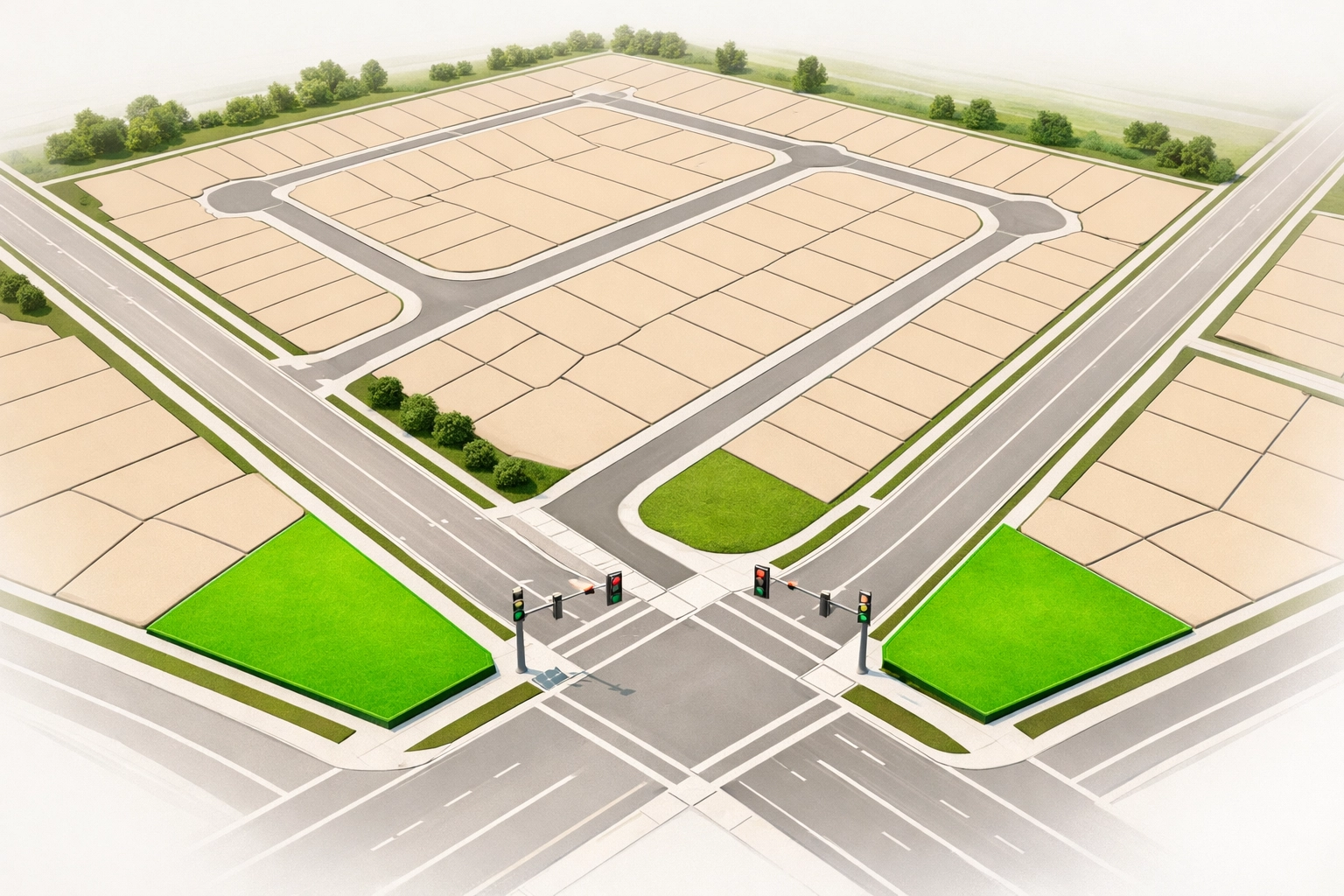
Not all corners are created equal. An unsignalized intersection or a "soft corner" (one without controlled access) might have decent visibility, but it doesn't command the same premium.
Retail tenants: especially the national chains: have very specific site selection criteria. They want:
- Daily traffic counts above 25,000 to 30,000 vehicles per day on at least one of the intersecting roads
- Signalized access to ensure safe ingress and egress during peak hours
- Corner positioning for maximum visibility and signage exposure from multiple directions
- Proximity to residential rooftops (which is exactly what you're building on the rest of the tract)
A signalized intersection checks all those boxes. It's not just a nice-to-have: it's the difference between a $100,000-per-acre corner and a $400,000-per-acre corner.
Where Experience Comes Into Play
Here's the thing: identifying these opportunities isn't always obvious when you're standing in a pasture looking at barbed wire and mesquite trees.
Over 23+ years in the North Texas land market, I've learned to read the signals that most people miss. You need to know:
- Which intersections are in the city or county thoroughfare plan for future signalization
- How to interpret traffic studies and project future counts based on planned residential density
- Which retailers are actively expanding in specific submarkets and what their site criteria look like
- How to structure the out-parcel during platting so it meets both municipal requirements and future tenant needs
- When to hold versus when to sell, based on market timing and your own capital needs
This isn't something you learn from a textbook. It's pattern recognition from seeing dozens of these plays work (and occasionally watching others fumble them by not planning ahead).
The Modern Complication: DOT Access Restrictions
Now, I'd be lying if I said the hard corner game hasn't gotten more complex in recent years.
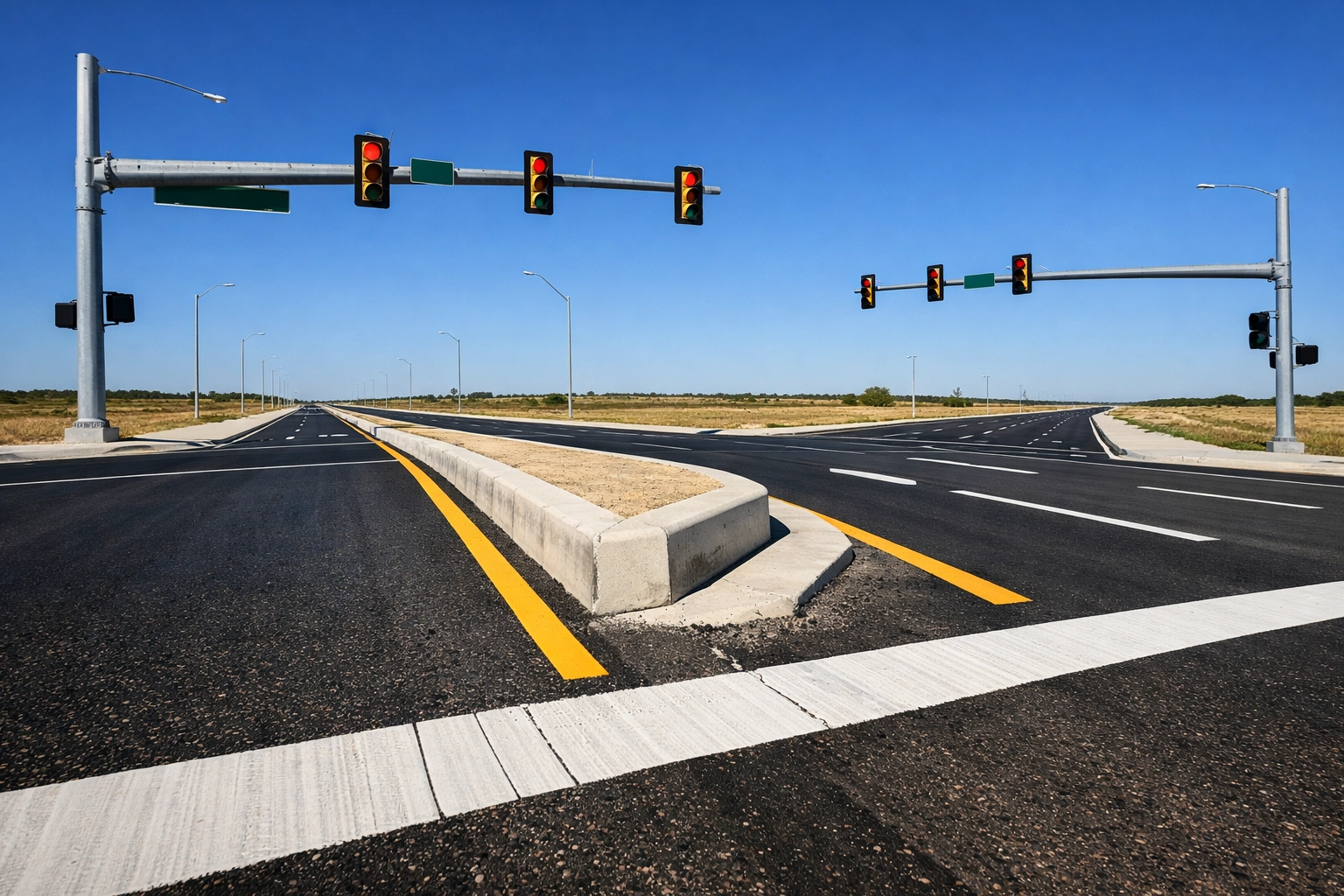
State and local Departments of Transportation are increasingly focused on traffic flow and safety improvements: which often means restricting access points at busy intersections. We're seeing more raised medians, limited left-turn access, and consolidated driveway entrances, all designed to reduce accident rates and improve traffic flow.
This can be a double-edged sword. On one hand, these improvements often increase traffic counts and make intersections more attractive to retailers. On the other hand, if your corner gets landlocked by access restrictions you didn't anticipate, you've just turned a premium asset into an average one.
This is exactly why due diligence has become more critical than ever. Before you close on a tract, you need to:
- Review any planned TXDOT or local transportation projects that could affect access
- Coordinate with municipal engineers to understand future median plans and driveway permit policies
- Structure your platting and zoning to preserve the most flexible access options
- Sometimes negotiate access easements or shared entries with adjacent properties if needed
The developers who win on hard corners today are the ones who do their homework upfront and plan for access logistics during the entitlement phase: not after the residential lots are already platted.
Real-World Application: The Residential Tract with Built-In Exit Strategy
Let's bring this full circle with a common scenario I see in Collin, Grayson, and Denton counties right now.
A regional developer identifies a 75-acre tract near a growing FM road. The tract is currently ag-exempt pastureland, but it sits inside the ETJ of a fast-growing city that's annexing eastward. The city's thoroughfare plan shows a future 4-lane divided arterial road bisecting the property within the next 5 years, with a signalized intersection planned at the FM road.
The developer buys the tract at $60,000 per acre: $4.5 million. During the entitlement process, they work with the city to:
- Rezone the interior acreage to residential (R-1 or SF-20, depending on density goals)
- Carve out two 2-acre commercial out-parcels at the future signalized corners
- Plat the residential portion into 150 finished lots
While the residential lots are being developed and sold to a production builder, the developer simultaneously markets the two commercial corners. One corner gets ground-leased to a convenience store operator for $10,000/month on a 25-year lease. The second corner sells outright to a fast-food franchisee for $750,000.
The math:
- Original cost basis: $4.5 million
- Revenue from corners: $750K sale + ~$120K in lease payments over the first year = $870K
- Adjusted cost basis on remaining 71 acres: ~$51,100 per acre
- Builder pays $75,000 per finished lot x 150 lots = $11.25 million gross
- After land cost, infrastructure, and entitlement expenses, the developer's margin just increased by nearly $900K simply by recognizing and executing on the hard corner opportunity
That's the power of the strategy when it's done right.
Don't Leave Money at the Intersection
If you're acquiring land for development in North Texas and you're not actively identifying hard corner opportunities within your tracts, you're either overpaying for the dirt or underperforming on the exit.
The hard corner strategy isn't complicated, but it does require foresight, local market knowledge, and the experience to structure deals that protect those high-value parcels during the entitlement process.
Whether you're a first-time developer looking at your first 50-acre tract or a seasoned operator putting together a master-planned community, these signalized intersections represent one of the most reliable financial hedges in land development: assuming you know what you're looking at.
If you're evaluating a tract and want a second set of eyes on the corner parcels and their potential, or if you're trying to figure out whether that future intersection is worth betting on, let's talk. After 23+ years and hundreds of transactions across North Texas, I've probably seen a version of your deal before.
Give me a call at (903) 818-0321. Let's figure out if you're sitting on a gold mine: or just a corner lot.
OUR LISTINGS

© 2026 Cooper Land Company
DMCA Notice | Terms & Services | Privacy Policy | Accessibility Statement
EQUAL HOUSING OPPORTUNITY



Cooper Land Company
2501 Greenspoint Ln, Prosper, TX 75078
Mobile: 214-714-5638
dan@cooperlandcompany.com