Section 179 for Developers: The Infrastructure Deduction You Might Be Missing

Most developers know about the F-150 deduction. Section 179 has become famous for letting business owners write off trucks and equipment in the year they buy them. But if that's where your knowledge of Section 179 stops, you're leaving money on the table: especially in 2026 when you're trying to offset the cost of getting a raw tract "pad ready."
Section 179 isn't just for vehicles. It's a powerful tool for immediately deducting infrastructure equipment, technology systems, and certain building improvements that go into transforming dirt into developable land. And when you're carrying high-interest debt on a land hold, every dollar you can keep in the bank matters.
Let's break down how this deduction actually works for developers and why it's worth a serious conversation with your CPA before year-end.
What Section 179 Actually Does
Section 179 allows eligible businesses to immediately deduct the full purchase price of qualifying equipment and software in the year it's acquired, rather than depreciating those assets over multiple years. It's the difference between writing off a $100,000 piece of equipment all at once versus spreading that deduction over five or seven years.
For 2026, the deduction limit is $2,560,000. That's the total amount you can write off across all qualifying purchases in a single tax year. For most land developers working on one or two projects at a time, that ceiling is more than enough to cover the infrastructure investments you're making.
The beauty of Section 179 is timing. If you're moving dirt in Q4 of 2026 and you drop $200,000 on earthmoving equipment, you can deduct the full amount on your 2026 return. That immediate reduction in taxable income frees up capital you can use to keep the project moving: or to grab the next deal that shows up.
What Actually Qualifies for Developers
Here's where it gets interesting for land guys. Section 179 isn't limited to pickup trucks and excavators. The list of qualifying assets includes:
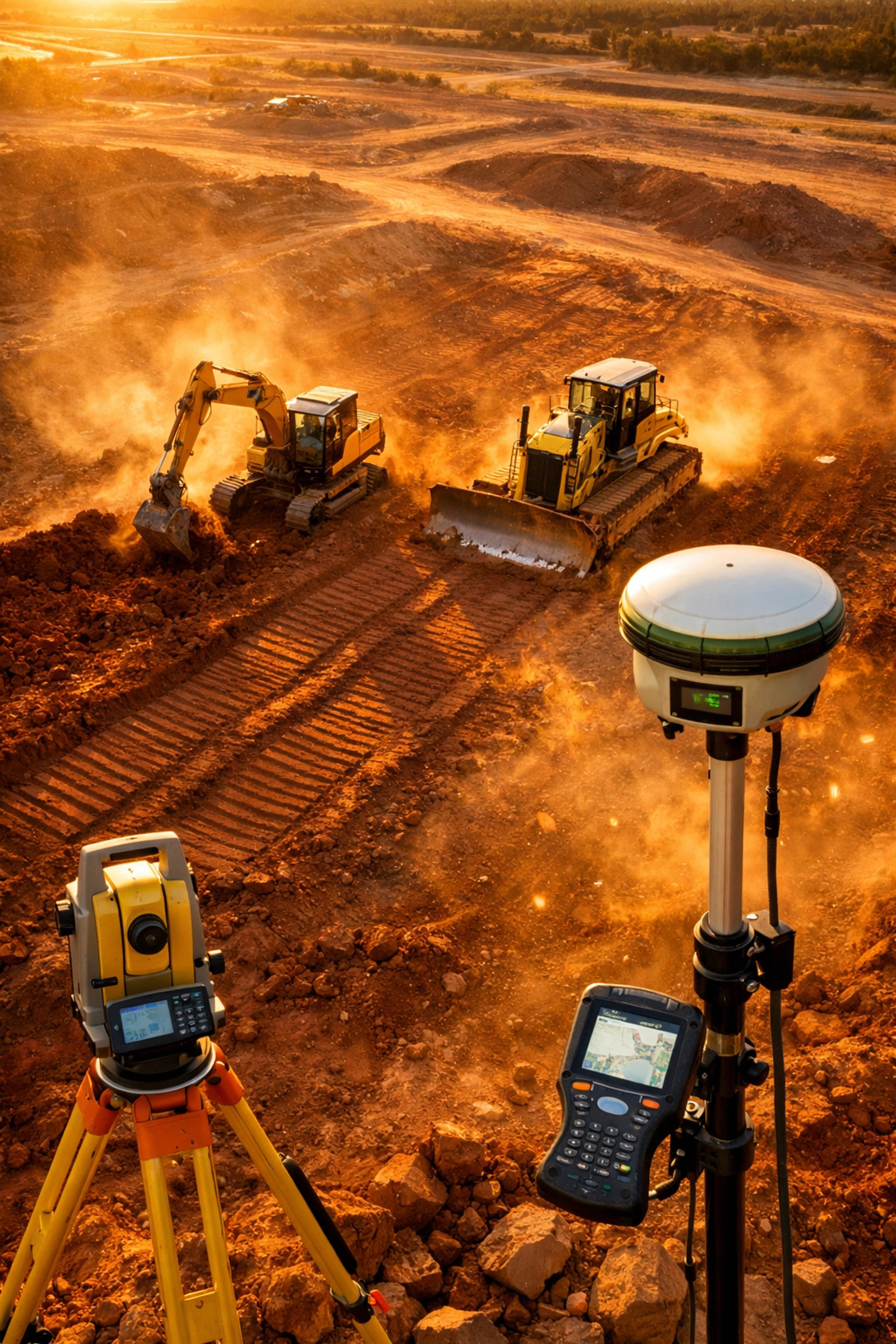
- Computers and technology systems – If you're running project management software, GPS grading systems, or even just upgrading the office setup, it counts.
- Off-the-shelf software – CAD programs, estimating tools, and accounting platforms all qualify.
- Office furniture and equipment – Desks, conference tables, filing systems: anything you need to run the business side of development.
- Manufacturing and production equipment – For developers doing any kind of on-site fabrication or material prep, this is a big one.
- Certain building improvements – This is the sleeper category. Roofs, HVAC systems, fire protection, alarm systems, and security systems installed in non-residential buildings can qualify under Section 179. If you're building out a model home sales office or a site trailer, some of those improvements may be deductible.
- Specialized non-passenger vehicles – This is the famous truck category, but it also covers heavy equipment like bulldozers, loaders, and dump trucks that aren't designed for highway use.
The key distinction is that the asset has to be used for business purposes more than 50% of the time. If you're buying a truck that doubles as your family SUV, you'll need to calculate the business-use percentage. But if it's a skid steer that never leaves the job site, you're in the clear.
Used Equipment Counts Too
One of the most underrated features of Section 179 is that it applies to used equipment: as long as it's "new to you." Bonus depreciation, which we've talked about in other posts, only works on brand-new assets. But Section 179 lets you deduct used graders, tractors, and even older software licenses if you're buying them for the first time.
This is huge for smaller developers who are bootstrapping projects and buying equipment at auction or from other contractors. You don't have to spring for the newest model to get the tax benefit. As long as the asset is in service and being used for your business, it qualifies.

The Strategy: Pairing Section 179 with Bonus Depreciation
Here's where the math gets fun. In 2026, bonus depreciation is back at 100% for qualifying property placed in service after January 19, 2025. That means certain assets can be fully expensed under bonus depreciation rules, while others might make more sense under Section 179.
Your CPA will help you decide which assets go where, but the general strategy is to maximize your deductions by stacking both tools. For example, you might use Section 179 for smaller purchases like office equipment and software, then apply 100% bonus depreciation to big-ticket items like a new excavator or a fleet of utility vehicles.
The combined benefit can be substantial: especially if you're also running a cost segregation study on any structures you're building. When you increase your upfront deductions through Section 179 and bonus depreciation, you're also increasing your unadjusted basis in assets, which can improve your eligibility for the qualified business income (QBI) deduction under Section 199A.
It's a layered approach, and it requires some planning. But the result is a significantly lower tax liability in the year you're making big investments, which means more cash on hand to keep the project moving.
Getting Sites "Pad Ready"
For land developers, the real value of Section 179 shows up when you're preparing a site for vertical construction. Getting raw land to "pad ready" status involves a lot of equipment purchases:
- Grading and earthmoving machinery
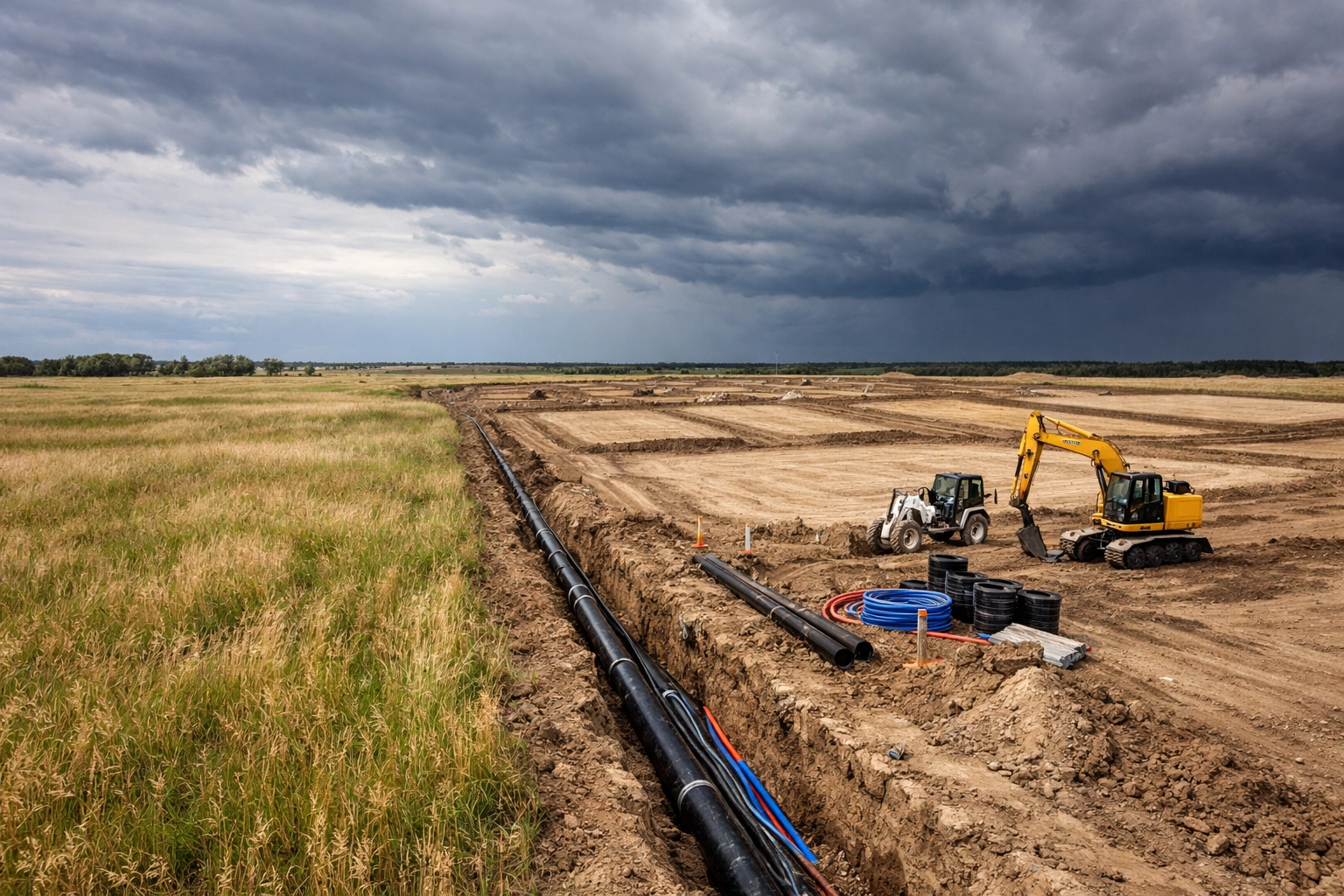
- Utility trenchers and boring equipment
- Temporary power and water infrastructure
- Site surveying and GPS technology
- Material handling equipment
All of those purchases are potentially deductible under Section 179, depending on how they're classified and used. The deduction doesn't apply to the land itself or to permanent structures like roads and drainage systems: but the equipment used to build those improvements? That's fair game.
Let's say you're prepping a 50-acre tract in Anna for a residential subdivision. You buy a used bulldozer for $80,000, a GPS grading system for $25,000, and a utility trencher for $40,000. That's $145,000 in immediate deductions under Section 179, assuming all three assets are placed in service before the end of the tax year.
If you're in a combined federal and state tax bracket of 35%, that $145,000 deduction saves you roughly $50,750 in taxes. You just reduced your carry cost on the project by that amount: and you still own the equipment.
Section 179D: A Different Beast
Before we wrap up, it's worth mentioning Section 179D, which is a completely separate tax incentive that often gets confused with Section 179. Section 179D is a deduction for architects, engineers, contractors, and designers who create energy-efficient commercial buildings for government or nonprofit entities.
If your firm is involved in designing or building public-sector projects: schools, municipal buildings, nonprofit facilities: Section 179D can be valuable. But there's a catch: the deduction is terminating for construction projects beginning after June 30, 2026. If you're working on any public-sector projects with energy-efficient components, now's the time to get those plans locked in before the deadline.
For most private land developers, Section 179D isn't relevant. But if you're doing design-build work for cities or school districts, it's worth a conversation with your tax advisor.
The Fine Print
Section 179 has a few limitations worth noting:
Income Limitation: You can't deduct more than your taxable business income. If your business shows a loss for the year, the Section 179 deduction gets carried forward to the next year. It doesn't disappear, but you also don't get the immediate benefit.
Phase-Out Threshold: If you purchase more than $3,200,000 in qualifying assets in a single year, the $2,560,000 deduction limit starts to phase out dollar-for-dollar. This rarely affects small to mid-sized developers, but it's something to be aware of if you're scaling up quickly.
Bonus Depreciation May Be Better: For very expensive equipment, 100% bonus depreciation might give you a bigger benefit because it has no dollar cap. Your CPA will run the numbers to determine which strategy works best for your situation.
The Takeaway
Section 179 is one of those tools that sounds too good to be true: but it's real, it's legal, and it's sitting there waiting for you to use it. If you're buying equipment, software, or infrastructure improvements to get your land projects moving, you're potentially leaving five or six figures in tax savings on the table by not structuring those purchases correctly.
The key is planning. Don't wait until December 31st to think about this. Talk to your CPA in Q3 or early Q4, identify which purchases are coming up, and figure out the optimal strategy for maximizing your deductions.
At Cooper Land Company, we work with developers every day who are trying to squeeze every dollar out of their land investments. Section 179 is one more tool in the toolbox: and if you're not using it, you're working harder than you need to.
Always consult with your tax professional before making purchasing decisions based on tax incentives. Every project and every business structure is different, and what works for one developer might not be the best fit for another. But if you're serious about reducing your tax liability and keeping more cash in the deal, Section 179 is a conversation worth having.
Related Reading
- Cost Segregation for Developers: Unlocking Cash Flow on 2026 Infrastructure
- Bonus Depreciation
- Underwriting for the 'Interest Rate Floor': The New Math on Land Carries
Interested in more on this topic? Call or text me at 214-714-5638.
OUR LISTINGS

© 2026 Cooper Land Company
DMCA Notice | Terms & Services | Privacy Policy | Accessibility Statement
EQUAL HOUSING OPPORTUNITY



Cooper Land Company
2501 Greenspoint Ln, Prosper, TX 75078
Mobile: 214-714-5638
dan@cooperlandcompany.com