Collin County Said No to a $475 Million Road Bond. Here's What That Means for Land Values.
Tuesday night, Collin County voters turned down all four county bond propositions, $817.5 million in total. The one I was watching most closely was Proposition B, the $475 million roads and bridges package. It failed by about 14,000 votes.
If you own land, are buying land or are planning a project anywhere from Frisco to Farmersville, this vote matters. But it probably doesn't mean what the headlines suggest. Here's how I'm reading it.
The Numbers
According to Collin County's unofficial election-night totals:
- Prop A, courts and detention, $296.5 million: 62.59% against
- Prop B, roads and bridges, $475 million: 51.67% against (219,065 no, 204,907 yes)
- Prop C, parks and open space, $6 million: 53.32% against, per Community Impact
- Prop D, elections and records facility, $40 million: 69.97% against, per Community Impact
A separate $600 million Collin College bond was on the same ballot and was also trailing in the late-night count. All results stay unofficial until they're canvassed.
Roads came the closest to passing. To me, that says most voters agree we need more road capacity. They just weren't ready to say yes to the whole package at once.
What Prop B Would Have Paid For
Prop B was the largest piece of the package. Reporting before the vote said it included service roads for the Dallas North Tollway, a second service road for the Outer Loop just west of US 75, an Outer Loop service road from Farmersville to the Rockwall County line, plus road widening and intersection improvements across the county.
Precinct 4 Commissioner Darrell Hale told Community Impact the failure would likely stall major projects like the Outer Loop and the Tollway improvements. He also said the county first identified about $1.2 billion in needs before trimming the ask to $817.5 million.
What's Still Moving
Here's the part a lot of people will miss. A "no" on new bonds doesn't stop the work voters already funded.
- The 2018 bond set aside $740 million, including $600 million for freeways like the Outer Loop.
- The 2023 bond included $380 million for roads, covering county roads, developer participation, the Outer Loop, and Tollway and freeway work.
- US 380 and Spur 399: In its December 2025 transportation update, the county said it had allocated $356 million, all segments were environmentally cleared, and right-of-way was being acquired for Spur 399 in McKinney.
- Outer Loop Segment 3A: The second service road from the Denton County line to Choate Parkway was under design, with construction set to begin in 2026.
So the roads that were already funded keep moving. What slows down is the next round of projects.
What It Means for Landowners and Investors
1. Land on funded roads just got more valuable. When fewer new corridors are coming, the ones already designed, cleared and funded become scarcer. If your tract fronts US 380, the Spur 399 route, an open Outer Loop service road or a widened arterial, your position improved this week. Those corridors are where the next rooftops, retail and medical will land first.
2. Underwrite road timing, not road maps. A line on the county thoroughfare plan isn't a road. If your deal assumed a Prop B project would be built soon, add time to your carry and stress-test your exit. That goes double for land along the eastern Outer Loop segments toward Farmersville and the Rockwall County line.
3. Developers who can build their own access will win. The 2023 bond already set money aside for road projects built in partnership with developers. With less bond money coming, cities and the county will lean harder on developer agreements, impact fees, PIDs and TIRZ districts. A seller who understands those tools, and a buyer who can pencil the extra cost, can still get a deal done.
4. Expect a second try. Collin County added nearly 43,000 residents between July 2024 and July 2025, the second-most of any county in the country, according to Census figures cited by the Allen Record. Growth like that doesn't wait. Commissioner Hale has already said the needs are bigger than the bond. A smaller or re-shaped road package in a future election wouldn't surprise me. When that list comes out, it'll be a road map for where the next value jump happens.
The Bottom Line
Collin County is still one of the fastest-growing places in America, and Prosper, Celina, McKinney and Frisco are still where people and businesses want to be. This vote doesn't change that. What it changes is the timing on some roads, and that makes land on the corridors that are already funded even more valuable.
If you want to know where your property sits on the road map, funded, planned or on hold, I'm glad to pull it up with you.
Related Reading
Let's Talk
I've worked land and commercial deals across North Texas for more than 23 years, and I live and work right here in Prosper. If you own land, want to buy land or are planning a project in Collin County or anywhere in Texas, let's look at your numbers together.
Email me at Dan@CooperLandCompany.com or visit cooperlandcompany.com.
Sources
- Collin County Elections, "November 3, 2026 Joint General and Special Election, Summary Results Report, Unofficial Totals": https://www.collincountytx.gov/docs/default-source/elections/election-results/november-3-2026---joint-general-and-special-election---summary-results-report---unofficial-totals82d47b712e4e479b9ef59ce6102cec92.pdf?sfvrsn=309a3c78_3
- Community Impact, "Collin County bond propositions failing in early results" (updated Nov. 4, 2026): https://communityimpact.com/allen/election/early-election-results-show-all-collin-county-bond-propositions-failing/
- Allen Record, "Collin County's $817.5M bond heads to Nov. 3 ballot" (Aug. 24, 2026): https://allenrecord.com/articles/collin-county-s-817-5m-bond-heads-to-nov-3-ballot-mt3i128b
- Collin County, Notice of Election and bond election page: https://www.collincountytx.gov/docs/default-source/elections/election-notices/collin-county-bond-notice-of-election.pdf?sfvrsn=23acc969_3 and https://www.collincountytx.gov/public-information/bond-election
- Collin County Commissioners Court, Transportation Update (Dec. 8, 2025): https://eagenda.collincountytx.gov/docs/2025/CC/20251208_3163/59256_Transportation%20Update%2C%2012-8-25v2.pdf
- Princeton Herald, "Election Results for Nov. 3, 2026" (Collin College Prop A partial results): https://princetonherald.com/2026/11/03/election-results-for-nov-3-2026/
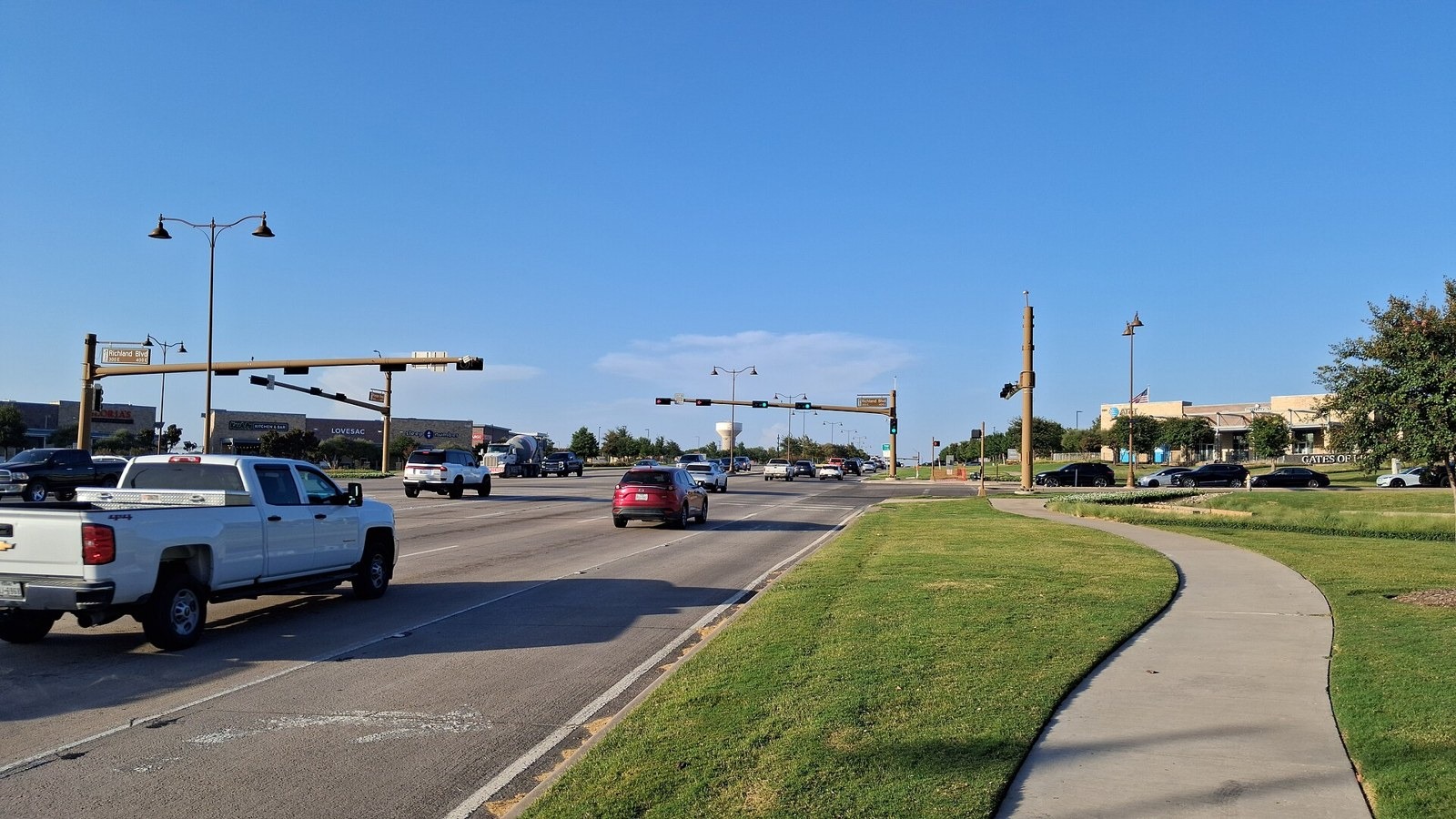
Header photo: Preston Road at Gates of Prosper, by Ranch9613, via Wikimedia Commons, CC0 public domain.
OUR LISTINGS

© 2026 Cooper Land Company
DMCA Notice | Terms & Services | Privacy Policy | Accessibility Statement
EQUAL HOUSING OPPORTUNITY


Cooper Land Company
2501 Greenspoint Ln, Prosper, TX 75078
Mobile: 214-714-5638
dan@cooperlandcompany.com